Healthy Food Plate
03/03/25 11:49
Dishing up a Balanced Diet
By far the question I am asked most often at corporate wellness events is “how can I eat healthy?” In the typical health day environment, it’s not easy to give a complete answer, so I use the healthy plate to inform people how to eat nutritionally balanced meals to support wellbeing and maintain a healthy weight.
What is a healthy diet?
What must I eat to be healthy and lose weight?
How can I improve my diet?
If you came to my table at your company's corporate health day and asked one of these questions, or any other variation of the same theme, I would have drawn your attention to my food portion plate. You remember it! The one that shows you how many vegetables you should be dishing up every night. 😉
I usually spend a lot of time with people at corporate wellness days talking about the portion plate. It is a great summary of the healthy eating guidelines, giving you a practical easy-to-remember way to ensure your plate of food meets your energy and nutrient requirements. Here’s everything we would have talked about, plus some extra information.
Healthy Eating
In South Africa, we have a set of food-based dietary guidelines, giving us a breakdown of what you should include in your diet and foods you should limit. Here they are:
- Enjoy a variety of foods.
- Make starchy foods part of most meals.
- Eat plenty of vegetables and fruit every day.
- Eat dry beans, split peas, lentils and soya regularly.
- Have milk, maas, or yoghurt every day.
- Fish, chicken, lean meat or eggs can be eaten daily.
- Drink lots of clean, safe water.
- Use fats sparingly. Choose vegetable oils, rather than hard fats.
- Use sugar, and foods and drinks high in sugar, sparingly.
- Use salt and food high in salt sparingly.
As simple as they are, they are still just words on a page or a screen. If you’re like me, you prefer images to help you make sense of information. This is where the food portion plate comes in handy—the one I always have on hand at health days.
Ultimately, I want you to walk away from my stand or online consultation armed with information that can make a real difference to your life. So, let’s run through this guide in more detail.
Carbohydrates
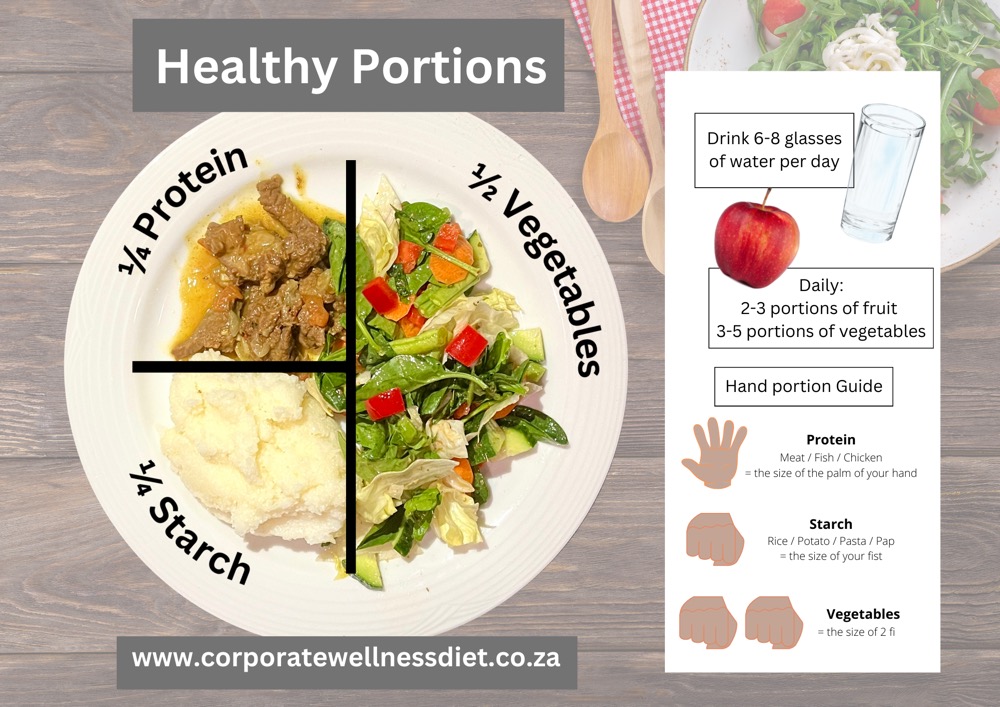
First, the average recommended carbohydrate portion is about a quarter of your dinner plate. This is equal to roughly a fist-sized portion of potato, rice, pap (mealie meal), or pasta.
Carbs are your body’s preferred source of energy. They are like all the employees that keep the company running. They are broken down into sugar during digestion and released into your blood in their simplest form - glucose. This causes a rise in blood sugar levels. Your blood then transports the sugar to the brain and muscles where the cells use it for energy.
All too often when I ask people how their dinner plate compares to mine, they laugh shyly and tell me that there are no, or very little, vegetables and half the plate is starch, the other half meat.
Unfortunately, although starchy foods taste good, they contain calories. And you know what happens when you consume too many calories… You gain weight! So, eating 2-3 times the recommended amount of potatoes or pap every day will result in an expanding waistline.
Also, the type of carbohydrate you choose affects your energy levels and overall wellbeing. Ideally your carbs should be high in fibre. That means eating brown bread (preferably low GI), brown rice, whole wheat pasta, sweet potatoes, and oats. These filling starchy foods should replace pap, white rice, white bread, peeled potatoes, and refined breakfast cereals in most of your meals.
Eating for health and weight loss begins by looking at the carbs in your diet: which ones and how much are you eating?
Protein
Image: patkisha
Meat, fish, chicken, eggs, and in the case of vegetarian meals, beans, lentils, and chickpeas take up the second quarter of your plate. This is a tough one for most people to swallow. After all, South Africans are meat eaters!
We eat protein to provide the body with amino acids - the building blocks of protein. These important chemicals build and repair tissue in the body, and they are also critical for the synthesis of hormones, enzymes, and antibodies.
Protein foods also provide the body with energy. However, ideally, they should be spared to do the jobs they are actually needed for. Eating protein for energy is like asking the CEO to greet people at reception. Sure, she can do the job, but her skills are better suited to other activities.
Although I am given a sideways look when I give this piece of advice, your body can only metabolise and use a small amount of protein with each meal. For you, the meat may be the tastiest part of your meal, but it is also the most expensive. Rather spend less on protein foods and more on vegetables to get a better balance of nutrients on your plate.
Fats
Even in the age of the keto diet, some people still say that fat makes you fat. While it is high in calories, some fats are essential for brain and eye health, and they also help to control inflammation in the body.
Yes, we’re talking about omega-3 fatty acids. They are found in foods like dark oily fish (remember the can of pilchards on my table?), nuts, seeds, avos, olive oil, and canola oil.
Saturated fats like those found on the side of your chop, skin on chicken, full cream dairy products, and cheese are responsible for high cholesterol levels when you eat too much of them. Always choose lean meats, fish, and skinless chicken whenever possible.
Vegetables
According to the portion plate guide, vegetables take up half of your dinner plate. It’s generally recommended that you consume 3-5 portions of vegetables per day. (A portion = 1 cup of raw veggies or ½ a cup of cooked ones) That’s a lot of veggies! But there are several reasons you want to fill up on these plant-based foods.
First, they are low in calories, allowing you to eat a full plate of food and fill up your stomach so you feel satisfied after your meal.
Second, vegetables are rich in fibre, which is essential for gut health.
Finally, vegetables contain the vitamins, minerals, and other nutritious plant chemicals (phytonutrients) that support your body’s structure and function. You can only meet your micronutrient requirements when you eat enough vegetables.
Fruit
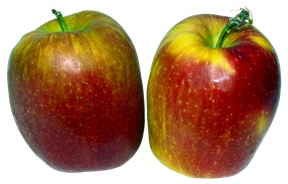
Like veggies, fruit is full of fibre, vitamins, minerals, and phytonutrients. Most fruits also have a fairly high sugar content, though. Luckily, the sugar comes naturally packed with fibre and other essential nutrients that moderate the effect it has on your blood sugar levels. However, even though it is recommended that you eat 2-3 portions of fruit per day, try to spread it out and avoid eating all 3 portions at the same time.
Water
Hydration is key to good health. Considering two thirds of your body is water, and all biological processes require water to work efficiently, doesn’t it make sense to make sure you drink enough water everyday?
Your brain needs water so you can think clearly. Your blood needs water so it can flow smoothly through your blood vessels, delivering essential nutrients and oxygen to the cells. Your skin needs water to maintain its elasticity and youthful glow. And, probably most noticeable, your digestive system needs water to digest your food, absorb nutrients, and expel waste.
How much is enough? Every body is different. Your height, weight, activity level, and the climate you live in all contribute to your water requirements. As a general rule, we are aiming for 1 ½ to 2 litres or 6-8 cups of water per day.
Dairy Products
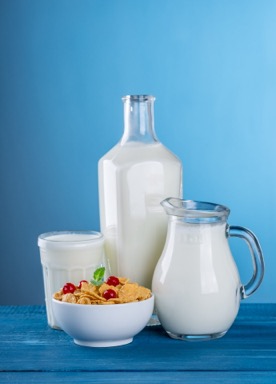
Finally, dairy products. They are a source of calcium, protein, carbohydrate, fat, and several other nutrients. General recommendations suggest consuming 2-3 portions of milk, yoghurt, maas, or cheese every day. A portion of milk is 1 cup (250ml), yoghurt and mass is ½ cup (125ml), and cheese is just 30g (a matchbox-size portion).
If you are lactose intolerant, you may still be able to tolerate the fermented dairy products such as yoghurt, maas, and cheese. If you not, choose soy milk as an alternative. It most closely matches the nutrient composition of cow’s milk.
Healthy Eating Made Simple
Keeping the food portion plate in mind makes it easy to eat a balanced diet. All you have to remember is first fill half your plate with veggies, then add a fist-sized portion of starch, and a palm-sized portion of meat. And voila! You have the perfect energy and nutrient balance to support your health and control your weight.
Do You Want to Consult With Me?
I love meeting people at corporate wellness days, but there usually isn't enough time to answer everyone's questions well. Also, many people are looking for more - personalised advice for a health condition, a structured meal plan, or someone to hold them accountable.
That's why I have made my services as simple to access as possible. No need for you to book time off work and waste time in the traffic. Book an online consultation with me, a Registered Dietitian.

If you'd like to chat with me a bit more before committing to an appointment, please book a free 15-minute meet and greet. These quick sessions gives you the opportunity to get to know me and share your health goals with me.

I look forward to virtually meeting you!
Wendy Lord,
Registered Dietitian, South Africa
Tags: food portion plate, healthy food plate, registered dietitian South Africa, corporate wellness